
Corporate Transfers: Ground Transport That Bills Cleanly
How corporate transfers should work for the people who book and pay for them: recurring schedules, consolidated invoicing and fixed prices your finance team can trust.
Corporate transfers are chauffeured journeys booked and paid for by a company: airport pickups for visiting clients, movements between offices, event schedules, and the recurring routes that certain executives travel every week. The passenger experience matters, but what separates a good corporate arrangement from a poor one is mostly invisible from the back seat. It lives in the booking process, the pricing and the invoice.
This guide takes the operational view. If you are the office manager, executive assistant or travel coordinator who actually arranges corporate ground transport (and the one who answers for it when finance queries a line item), this is written for you.
What Finance Teams Actually Want From Ground Transport
Ask a finance team what frustrates them about travel spend and ground transport comes up quickly. Not because it is the largest number, but because it is the messiest one: dozens of small receipts, from different providers, submitted weeks late by travellers who have forgotten which trip was which.
The fix is structural, not behavioural. Route all journeys through one provider, against one account, with a reference captured at booking. Then the month’s ground transport arrives as a single itemised invoice, each journey tagged to a cost centre, project code or guest name. Reconciliation becomes a ten-minute check rather than an expense-report archaeology project.
Fixed pricing matters for the same reason. A price agreed at booking and honoured on the invoice means the number in the approval email is the number in the ledger. Surge pricing, waiting-time surcharges and post-trip adjustments are precisely what makes ride-hailing receipts so tiresome to audit. SilverDrive agrees every price at booking; it does not change afterwards.
The Three Kinds of Corporate Transfer
Most corporate ground transport falls into three shapes, and each has its own booking logic.
Recurring transfers. The same executive, the same route, most weeks: typically home or office to Schiphol and back. These should be standing arrangements, not fresh bookings. Set the pattern once, confirm each instance, and keep the same chauffeur where the schedule allows so nothing needs re-explaining.
Guest movements. A client, board member or candidate is flying in, and your company is hosting. You book, the chauffeur meets them at arrivals with a name board, and the invoice comes to you. The guest never touches payment. This is where ground transport quietly does reputational work: the pickup is your company’s first physical impression, before anyone has shaken a hand.
Scheduled group days. Board meetings, off-sites, investor visits and events, where several people move between several points on a timed plan. Here the booking is really a schedule, and the value of a single operator is that one dispatcher holds the whole day. For the corporate day-to-day version, a V-Class or a pair of saloons usually does it; for larger movements the same fleet extends to a 16-seat Sprinter and a 56-seat coach.
Why One Provider Beats Ad-Hoc Booking
It is tempting to treat each journey as a one-off and let travellers sort themselves out. The table below shows what that costs in practice.
| Ad-hoc booking per trip | One corporate account | |
|---|---|---|
| Invoicing | Individual receipts, expensed later | One monthly itemised invoice |
| Cost allocation | Reconstructed from memory | Cost centre captured at booking |
| Pricing | Varies by app, time and demand | Fixed, agreed at booking |
| Guest pickups | Guest arranges own transport | Booked and paid by the host |
| Delays | Traveller rebooks and pays again | Flight tracked, pickup adjusts free |
| Accountability | Different provider each time | One contact who knows the account |
None of this requires a contract negotiation or a minimum volume. It requires a provider set up to work this way, which is a business-model question, not a fleet question. Our corporate car service guide goes deeper on how to evaluate providers; the short version is that consolidated invoicing and account continuity only work when the company you book actually operates the cars.
How Corporate Transfers Work With SilverDrive
SilverDrive runs corporate transportation on its own fleet, founded in Amsterdam and operating across the Netherlands and Europe. The arrangement for corporate accounts is deliberately plain.
You book by email or phone, with whatever reference your finance process needs: cost centre, project code, guest name. The price is confirmed at booking and does not move. Airport transfers include free flight tracking, so a delayed arrival shifts the pickup automatically without anyone calling anyone. Chauffeurs are screened and English-speaking, and on multi-day bookings the same chauffeur stays with the account.
Invoicing is consolidated: one itemised invoice for the period, each journey against its reference. Availability is 24/7, which matters more than it sounds: corporate travel does not keep office hours, and the 05:40 departure to catch a morning flight is exactly the booking that ad-hoc options handle worst.
For guidance on the airport side specifically (what details to send, how name boards work, what happens when flights move), see our airport transfer service page.
Setting Up Corporate Ground Transport: A Short Checklist
If you are formalising what has been an ad-hoc mess, four decisions get you most of the way.
- Decide what reference travels with every booking. Cost centre, department, event code. Pick the field finance actually reconciles against, and make it mandatory at booking.
- Identify the recurring routes. Anything travelled more than twice a month becomes a standing arrangement rather than a repeated one-off.
- Nominate the bookers. Corporate transfers work best when two or three named people hold the relationship with the provider, rather than every traveller booking independently.
- Agree the vehicle defaults. E-Class for standard executive transfers, S-Class for clients and senior guests, V-Class for groups. Set the default once so each booking is a one-line request.
Pricing for standard routes is straightforward to establish up front; see our prices page for how quotes work, and note that a quote given is a price kept.
Frequently Asked Questions
What Counts as a Corporate Transfer?
Any chauffeured journey booked and paid for by a company rather than an individual: airport pickups for visiting clients, transfers between offices, event shuttles, board-day schedules and recurring executive routes. The defining feature is not the journey itself but how it is arranged, invoiced and accounted for.
Can Corporate Transfers Be Billed on a Single Monthly Invoice?
Yes. SilverDrive consolidates all journeys for an account into one itemised invoice, with each journey listed against the reference or cost centre you supply at booking. Finance teams reconcile one document instead of chasing dozens of individual receipts from travellers.
How Do Fixed Prices Work for Business Transfers?
The price for each journey is agreed at the time of booking and does not change afterwards: no surge pricing, no waiting-time surprises, no hidden fees. A flight delay on a tracked airport transfer does not alter the price. What was quoted is what appears on the invoice.
Can You Handle Transfers for Our Guests, Not Just Our Own Staff?
Yes, and this is one of the most common corporate uses. You book on behalf of a visiting client or candidate, the chauffeur meets them with a name board, and the invoice comes to you. The guest never handles payment or booking details.
Do You Support Recurring or Standing Corporate Bookings?
Yes. Weekly airport runs, regular office-to-office routes and standing arrangements for particular executives can all be set up once and then simply confirmed each time. Same-day changes go through the same contact rather than a new booking process.
What Vehicles Are Used for Corporate Ground Transport?
SilverDrive runs its own fleet: Mercedes-Benz E-Class and S-Class and BMW 7 Series for executive transfers, EQS and i7 for electric journeys, V-Class for small groups, and Sprinter or coach options for larger movements. The vehicle booked is the vehicle that arrives.
Set Up Corporate Transfers That Your Finance Team Will Thank You For
Corporate transfers done properly are boring in the best way: the car is there, the price is the one agreed, and the invoice reconciles itself. Getting there takes one decision: routing your company’s ground transport through a single operator that owns its fleet and bills like a business.
SilverDrive is available 24/7, rated 4.7 out of 5, with fixed prices agreed at booking. Book a corporate transfer or contact us to set up an account for your company.
More from the Journal
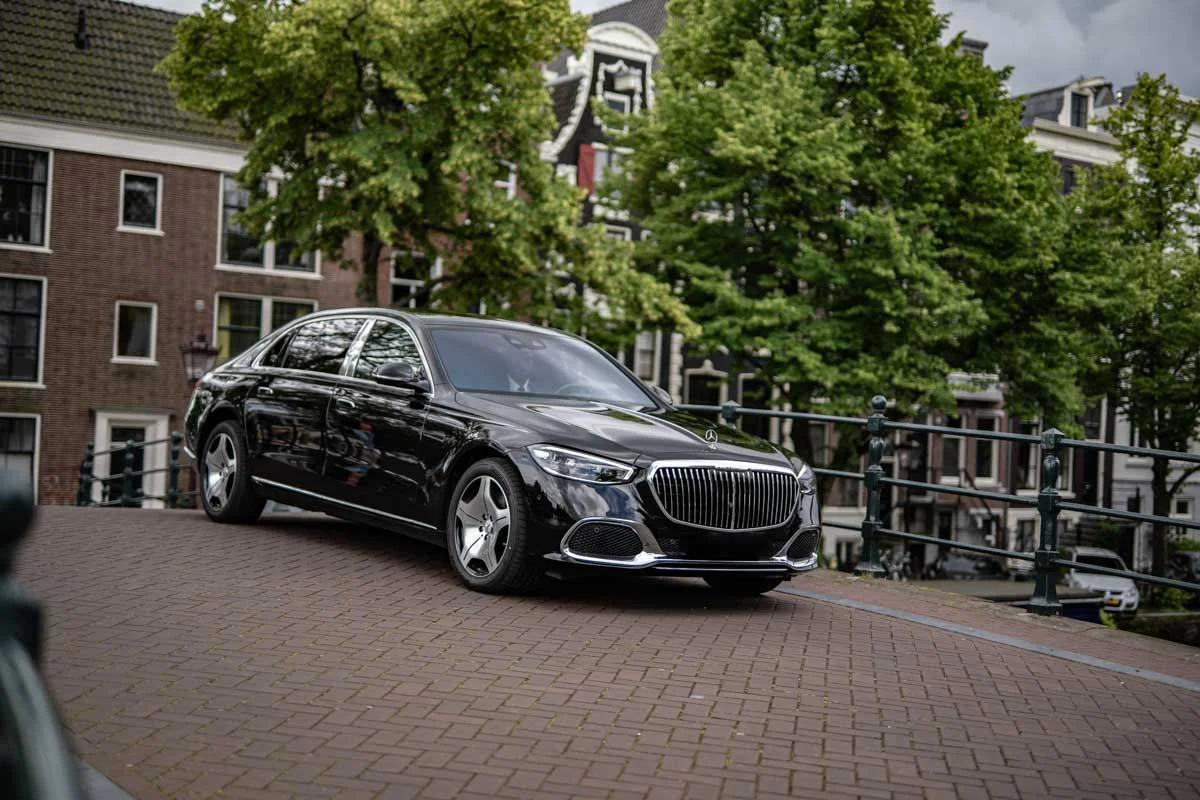
Chauffeur Service in Haarlem: The Quiet Side of Amsterdam
Chauffeur service in Haarlem: Schiphol transfers, the North Sea beaches at Zandvoort, bulb-field season and a medieval centre cars cannot enter.
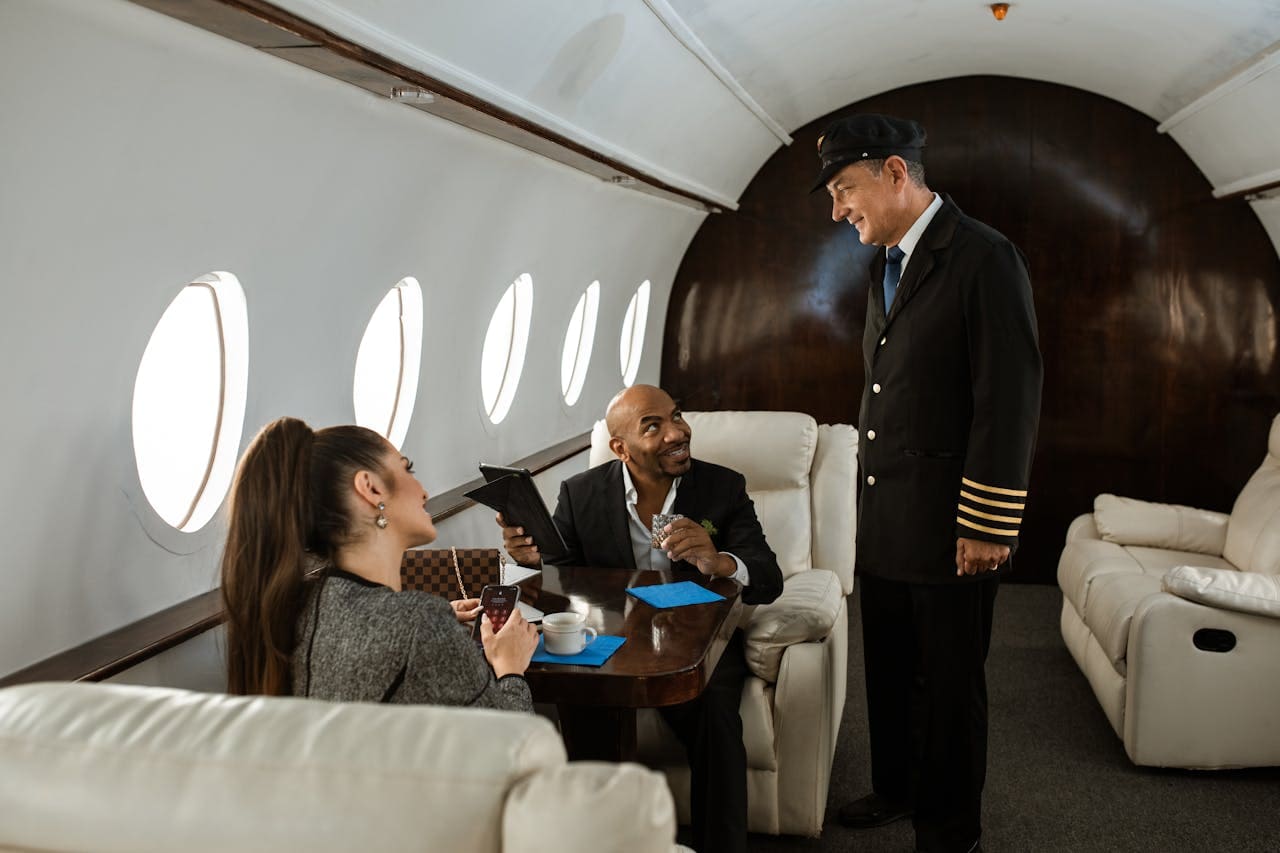
How to Become a Chauffeur: Licences, Skills and Getting Hired
How to become a chauffeur or private driver: the Dutch taxi driver card explained, licensing across Europe, what operators actually screen for, and the real job.

Wedding Transportation: Moving the Guests, Not Just the Couple
A practical wedding transportation guide: shuttle loops, vehicle mix, timings that hold, late-night returns and the contingencies that save the evening.