
Driving and Parking in Amsterdam: What Visitors Should Know
An honest guide to driving in Amsterdam: streets built for bikes, scarce and expensive parking, how P+R works, and when you should not drive at all.
Here is the honest answer about driving in Amsterdam: for most visitors, it is the wrong tool. The centre was laid out four centuries before the car, it now runs at 30 km/h, its streets belong practically to bicycles, and parking is scarce, restricted and among the most expensive in Europe. A car is a fine way to reach Amsterdam. It is a poor way to move around inside it.
We say that as a company that drives here every day. Our chauffeurs simply do not park (they drop off, wait elsewhere and return), which sidesteps almost everything that follows. Read on, then decide which side of that arrangement you want to be on.
What Driving in the Centre Is Actually Like
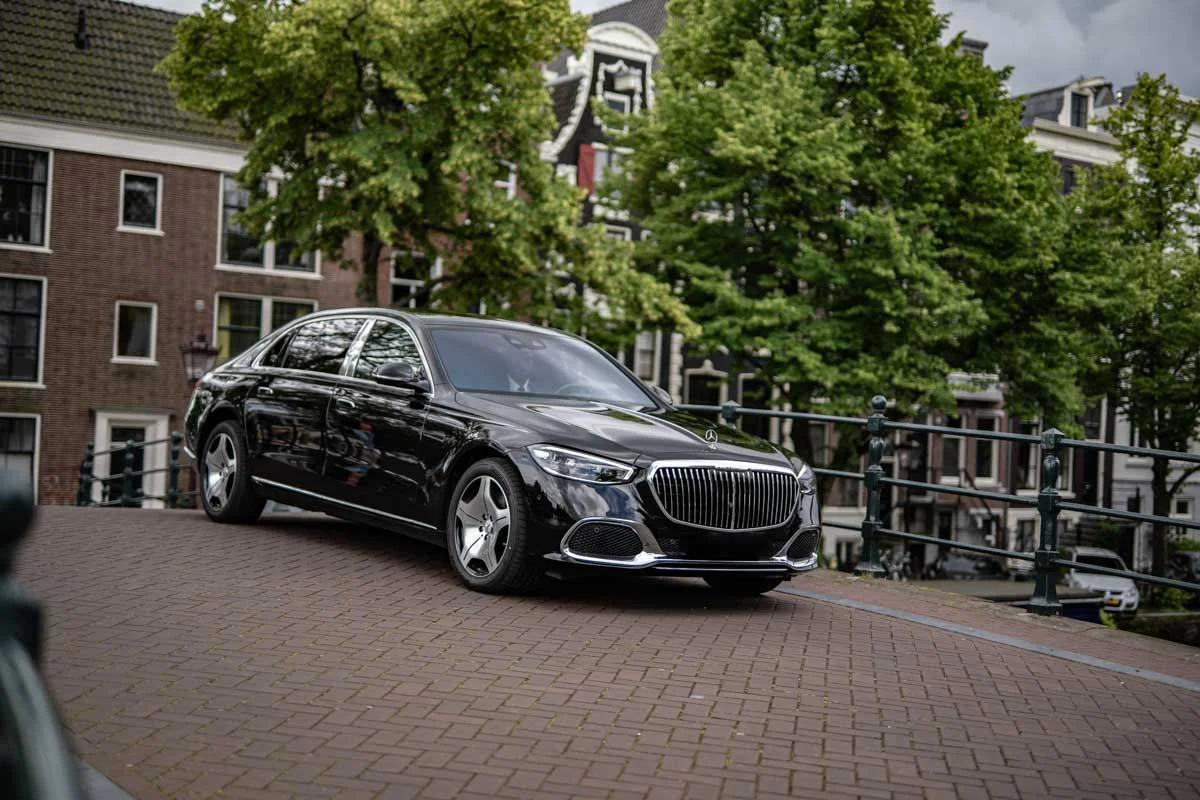
The canal ring is a UNESCO-listed 17th-century street plan: narrow one-way lanes, humpbacked bridges, and quaysides with no barrier between the parking bay and the water. Onto that, the modern city has layered a deliberate policy of reducing car traffic: a 30 km/h limit on most streets, cut-throughs closed, space reallocated to bikes year after year.
Then there are the bikes. Amsterdam moves on them, in numbers first-time visitors genuinely disbelieve. They come from both directions, including ones you did not think were directions, and whatever the formal right of way says, the bike is not going to stop. Add trams (which do have priority and run on rails you must cross carefully), and driving in the centre becomes a low-speed exercise in constant vigilance.
None of this is dangerous if you drive slowly and defensively. It is simply tiring, inefficient, and a strange way to spend a visit to a city this pleasant to walk.
Parking in Amsterdam: Scarce, Regulated, Expensive
Parking policy is the sharp end of the city’s approach to cars. Nearly all street parking in Amsterdam is paid, hours are long, enforcement is digital and effective, and hourly rates in the centre are among the highest in Europe, set high on purpose. We will not quote figures that will be stale within a year; the municipality publishes current tariffs, and it is worth looking before you commit.
The practical points that catch visitors:
- Payment is by licence plate, at machines or by app, and “I didn’t know” is not a defence the scan cars accept.
- Resident permit zones cover much of the city; a free-looking space often is not one.
- Garages are the sane option if you must park; pre-booking online is usually cheaper than driving up.
- Hotel parking in the canal ring is the exception, not the rule, and priced accordingly. Ask before you arrive.
Budget honestly and a day of central parking can cost as much as a decent dinner. Budget carelessly and the fine costs more.
P+R: The Right Answer If You Drive Yourself
Amsterdam’s Park and Ride system is the city’s honest bargain with drivers: leave the car at the edge, and we will make it cheap. Several large P+R sites sit on or near the A10 ring, connected to the centre by metro or tram in roughly 10 to 20 minutes. Park there, continue by public transport, and the day rate is a small fraction of central parking. The discount is tied to actually using public transport and terms change, so check the city’s site for current rules.
For a couple visiting for the day with no fixed schedule, P+R is genuinely the best value way to bring a car to Amsterdam. Its limits appear when the day has structure: luggage, business dress, a dinner reservation across town, or a departure that cannot wait for a timetable. You are bolting a park-walk-ride-walk chain onto both ends of every plan: fine for a museum day, poor for anything with a clock on it. For how the ring itself behaves at peak times, see our Amsterdam rush hour guide.
Your Realistic Options, Compared
| Option | Best for | The catch |
|---|---|---|
| Walking / bikes / trams | Moving around the centre | Weather; luggage; distance |
| Own car + P+R | Flexible day trips on a budget | Adds transfers to every plan |
| Own car, parked centrally | Almost nothing | Cost, scarcity, stress |
| Taxi / ride-hailing apps | One-off short hops | Variable pricing and availability |
| Chauffeured car | Schedules, groups, luggage, business | Costs more than the tram, and says so upfront |
The pattern is that each option is good at one kind of day. The mistake is bringing the car-parked-centrally option to a schedule-shaped problem, or a tram-shaped solution to a luggage-shaped one.
The Honest Conclusion, and Where We Come In
Most visitors should not drive themselves in Amsterdam, and now you know why: the centre resists cars by design, parking is a costly sub-project of its own, and the bikes out-manoeuvre you at every junction. If your visit is a flexible city break, take the train in, or drive to a P+R and forget the car until you leave.
But notice what actually makes self-driving painful here: parking, vigilance, and the clock. A chauffeur service removes exactly those three things. You are dropped at the door while someone else deals with where the car goes, and you rest while someone else watches for bikes.
That is why the calculation flips for certain visitors: a packed business day across the city, a family with luggage landing at Schiphol, day trips from Amsterdam to the countryside or Rotterdam, or a group of six moving together in a V-Class. For those days, being driven is not an indulgence on top of the sensible option. It is the sensible option. The price is fixed at booking, so the comparison is at least honest: one known figure against parking, stress and lost hours. What that figure covers is on our prices page, and our Schiphol pickup guide shows how the first mile works.
Frequently Asked Questions
Is it a good idea to drive in central Amsterdam?
For most visitors, no. The centre is a 30 km/h environment designed around bicycles and trams, street parking is scarce and among the most expensive in Europe, and the city actively discourages car access. Cars make sense for reaching Amsterdam, much less for moving around inside it.
How expensive is parking in Amsterdam?
Central street parking ranks among the priciest in Europe, and hourly rates climb the closer you get to the canal ring. Exact tariffs change, so check the municipality of Amsterdam’s website for current figures. Garages cost similar amounts; pre-booking one online is usually cheaper than driving in and hoping.
What is P+R in Amsterdam and how does it work?
Park and Ride sites on the edge of the city, near the A10 ring, where you park cheaply for the day on condition that you continue by metro or tram. The ride into the centre takes roughly 10 to 20 minutes. Terms and rates change, so check the city’s site, but it is by far the cheapest way to bring a car to Amsterdam.
Do cyclists have priority in Amsterdam?
Often legally, and almost always practically. Bikes are everywhere, they move fast, and they will not wait for you to work out the right of way. Assume every turn crosses a bike lane, check mirrors before any manoeuvre, and never open a car door without looking. Locals drive defensively around bikes; visitors should copy them.
Can I drive to my hotel in the canal ring?
Usually yes for loading and unloading, but many streets are narrow, one-way or closed to through traffic, and hotel parking is rare and expensive where it exists at all. Ask the hotel for its exact access instructions before you arrive. Many guests find a transfer to the door simpler than bringing a car they then need to store.
Skip the Parking Problem Altogether
Amsterdam is a city best experienced from a pavement, a saddle or a back seat, rarely from behind a wheel hunting for parking. If your visit runs on a schedule, involves luggage or moves a group, let us do the driving: door-to-door, fixed price agreed at booking, and no parking sub-plot. Tell us your plans and we will quote the day as one number.
More from the Journal
Chauffeur Service in Haarlem: The Quiet Side of Amsterdam
Chauffeur service in Haarlem: Schiphol transfers, the North Sea beaches at Zandvoort, bulb-field season and a medieval centre cars cannot enter.

How to Become a Chauffeur: Licences, Skills and Getting Hired
How to become a chauffeur or private driver: the Dutch taxi driver card explained, licensing across Europe, what operators actually screen for, and the real job.

Wedding Transportation: Moving the Guests, Not Just the Couple
A practical wedding transportation guide: shuttle loops, vehicle mix, timings that hold, late-night returns and the contingencies that save the evening.