
Private Jet Ground Transport: FBO Transfers Done Properly
Private jet ground transportation explained: how FBO transfers differ from terminal pickups, tail-number timing, planeside cars and real discretion.
The point of flying privately is that the aircraft waits for you, not the other way round. Private jet ground transportation exists to keep that promise on the ground: the car is on the tarmac or at the FBO door when the steps come down, the luggage moves from hold to boot in one motion, and the passenger is on the motorway while a commercial arrival would still be walking to passport control. Done properly, the ground leg is invisible. Done as an ordinary airport pickup, it undoes the entire logic of the flight.
SilverDrive handles this work across the Netherlands and Europe, including established relationships with the Schiphol VIP Centre and Jet Aviation’s FBO at Rotterdam The Hague Airport. Here is what a proper FBO transfer involves, and what to check before you book one.
FBOs Are Not Terminals, and the Transfer Is Not the Same Job
A fixed-base operator is the private aviation facility at an airport: a discreet building with its own apron, its own lounge, its own security and customs handling. No queues, no crowds, no arrivals hall. Passengers can move from cabin to car in minutes.
That changes what the ground transport has to do. A commercial terminal pickup is built around uncertainty: big buildings, public exits, a name board to solve the finding problem. An FBO transfer is built around precision: the FBO knows exactly who is landing and when, the car must be the right car in the right place at the right minute, and the driver must be expected, by name and registration, at a facility that controls access tightly.
| Commercial terminal pickup | FBO transfer | |
|---|---|---|
| Where the car waits | Public pickup area or car park | At the FBO door, or planeside, where permitted |
| Finding each other | Name board or phone call | The FBO expects the car; nothing to find |
| Timing source | Airline flight number | Tail number, plus contact with the FBO or handler |
| Time from touchdown to moving | Often 30 to 60 minutes | Frequently under 10 |
| Access requirements | None | Driver and vehicle details cleared in advance |
The practical consequence: an operator that treats an FBO booking as a normal airport job (driver in the public car park, waiting for a call) wastes exactly the minutes the jet was chartered to save.
Planeside Pickup: What “Where Permitted” Really Means
The best version of this service puts the car on the apron beside the aircraft. Whether that is possible is decided by the FBO and the airport, not the transport company. Airside access requires the vehicle registration, the chauffeur’s details and the passenger manifest to be cleared in advance, and rules differ by airport and by day.
So treat any provider that flatly promises planeside collection everywhere with caution, and treat “we will arrange airside access where the FBO permits it” as the honest formulation; it is the one we use. Where planeside is not available, the difference is small in practice: at an FBO, “landside” means the car is standing directly outside a door that is thirty metres from the apron, engine warm, boot open. Either way, the luggage is handled once and the passenger never stands around.
Departures mirror arrivals. The car delivers to the FBO door minutes before wheels-up rather than the two hours a commercial flight demands, and the chauffeur stays until the passenger is through the door, because private departures do sometimes bounce back when a slot moves, and a car that has already left is no use.
Tail-Number Timing: Why Private Flights Need Different Tracking
Commercial flights run to a published schedule and rarely move more than an hour. Private flights move constantly, because they follow the principal’s day: the meeting overruns and the departure slides two hours; a headwind turns into a tailwind and the arrival is forty minutes early; the routing changes en route from Rotterdam to Schiphol.
We track private flights by tail number and stay in contact with the FBO or the flight’s handler, which is how the car is correct to the aircraft’s actual movement rather than its filed plan. This is the same discipline as the free flight tracking on our commercial airport transfers, adapted to aviation that does not behave like an airline. And because every SilverDrive price is fixed at booking, an arrival that slides three hours costs what was quoted; the flexibility is absorbed by us, not billed to you.
For flight departments and brokers, the operational contact matters as much as the tracking: give us the tail number, the FBO and a crew or handler contact, and updates flow without the passenger ever being asked what time they land.
Schiphol, Rotterdam and Beyond
At Schiphol, private aviation and VIP handling run through dedicated facilities away from the main terminal. SilverDrive works with the Schiphol VIP Centre, where we collect and deliver passengers using the centre’s own protocols. If you are weighing that service for a commercial arrival too, we have written a separate guide to the VIP lounge at Schiphol.
At Rotterdam The Hague Airport, we work with Jet Aviation’s FBO, a common choice for private traffic into the Randstad. From the FBO, central Rotterdam is minutes away and Amsterdam is roughly an hour by road, which is why some operators prefer Rotterdam’s quieter movements over Schiphol’s slots. We also serve private aviation at Eindhoven, Brussels and Düsseldorf, and position cars to any European airport a routing requires. With private drivers across Europe, the same chauffeur can meet a multi-leg trip at each stop rather than a new face at every FBO.
The vehicles are matched to the passenger, not pulled from a pool: the Mercedes-Maybach S-Class for principals, the S-Class and BMW 7 Series for executives, the V-Class for entourages and luggage-heavy arrivals, and electric EQS or i7 where a flight department’s sustainability reporting prefers it. All from our own fleet: nothing brokered, so the car that was promised is the car on the apron.
Discretion Is a Practice, Not a Promise
Most private aviation clients are not famous. Some are, and the ones who are get the same treatment as the ones who are not; that is rather the point. In practice, discretion means: unmarked cars, no name board unless one is requested, a chauffeur briefed before arrival so nothing needs discussing at the door, routes that avoid unnecessary public frontage, and, permanently, no conversation about who was carried, where, or when.
It also means keeping the circle small. SilverDrive chauffeurs are screened, and on multi-day stays the same chauffeur is retained throughout, so a visit involves one driver rather than a rota of strangers. A note on scope, for clarity: we provide driving, not protection. We do not offer bodyguards, armed escort or armoured vehicles, and where a client travels with a close-protection team, we work alongside the team they appoint. The same clear-scope model applies to our secure movement of valuables, which private aviation clients often use for items travelling separately from the passenger.
Booking an FBO Transfer
Whether you are a broker, a flight department, a family office or the passenger, the booking needs four things: the tail number, the FBO, the passenger or handler contact, and the destination. We confirm the vehicle, the chauffeur and a fixed price before the aircraft moves. Book the transfer or contact us to set up a standing arrangement. Flight departments that use us regularly simply send the tail number and consider it handled.
Frequently Asked Questions
What Is an FBO and How Is It Different from an Airport Terminal?
An FBO (fixed-base operator) is the private aviation facility at an airport: a small lounge and handling operation where private jets park, passengers clear formalities and cars collect. There are no check-in queues, no public arrivals hall and no crowds. A transfer that works for a commercial terminal is the wrong shape for an FBO, where minutes and names matter more than name boards.
Can the Car Really Drive Up to the Aircraft?
At many FBOs, yes, with prior arrangement. Airside access is controlled by the FBO and the airport, requires the passenger details and vehicle registration in advance, and is never guaranteed by the transport company alone. Where planeside pickup is not permitted, the car waits directly outside the FBO door, which in practice means a walk of metres, not terminals.
How Does the Chauffeur Know When a Private Jet Actually Arrives?
Private flights are tracked by tail number rather than a commercial flight number, and their timings move far more than airline schedules: departures slide with the principal’s day. We track the tail number, stay in contact with the FBO or handler, and time the car to the aircraft’s actual movement, at a fixed price that does not change with the delay.
Which Dutch Airports Does SilverDrive Serve for Private Aviation?
All of them, with established working relationships at the Schiphol VIP Centre and with Jet Aviation’s FBO at Rotterdam The Hague Airport. We also regularly serve private aviation at Eindhoven and across the border at Brussels and Düsseldorf, and will position cars to any European airport a routing requires.
How Is Discretion Handled for Well-Known Passengers?
Unmarked cars, no name boards unless requested, chauffeur briefed on the passenger’s preferences before arrival, and no discussion of who was carried, where, or when. Screened chauffeurs, and the same chauffeur retained across a multi-day stay so the circle of people involved stays as small as the FBO model intends.
Should Ground Transport Be Booked Through the Jet Operator or Directly?
Either works, and we take bookings from brokers, operators, flight departments and family offices daily. Booking directly gives you one accountable operator, a fixed price agreed in advance, and continuity (the same chauffeur through a stay) rather than whichever local car a handler sources. Whoever books, we need the tail number, the FBO and a passenger contact.
More from the Journal
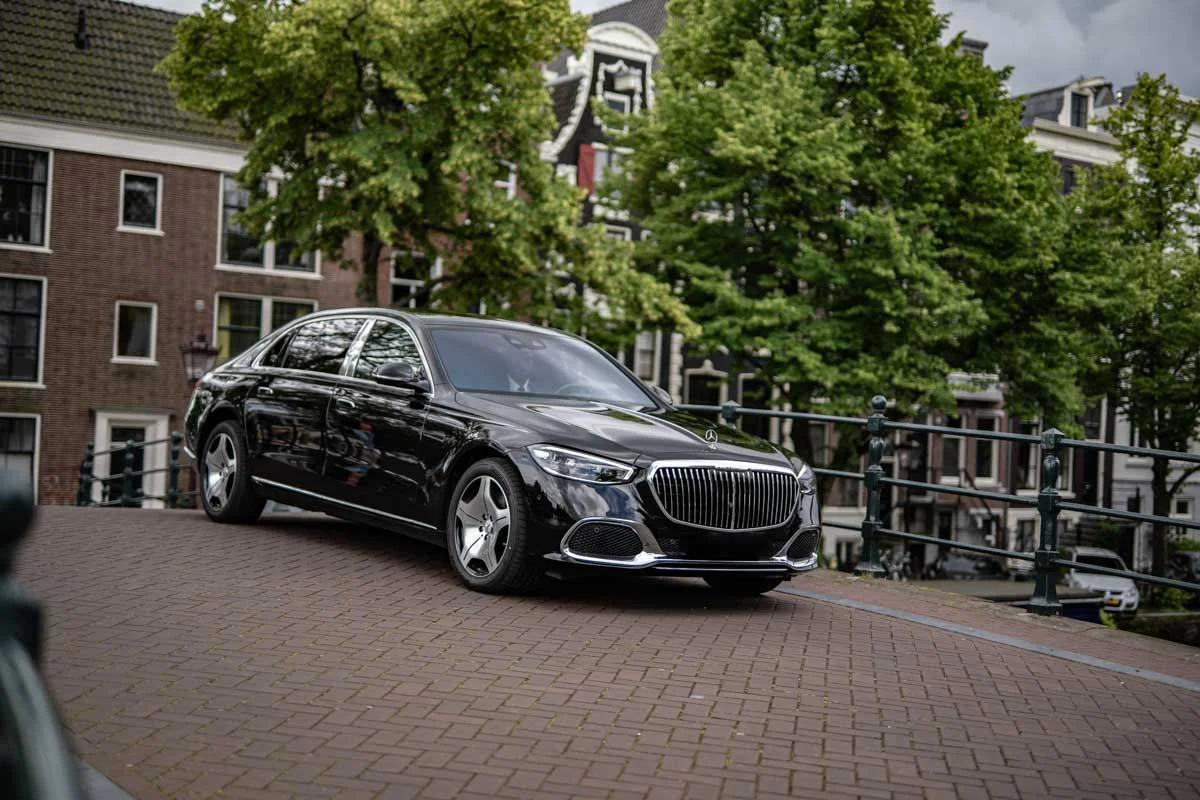
Chauffeur Service in Haarlem: The Quiet Side of Amsterdam
Chauffeur service in Haarlem: Schiphol transfers, the North Sea beaches at Zandvoort, bulb-field season and a medieval centre cars cannot enter.
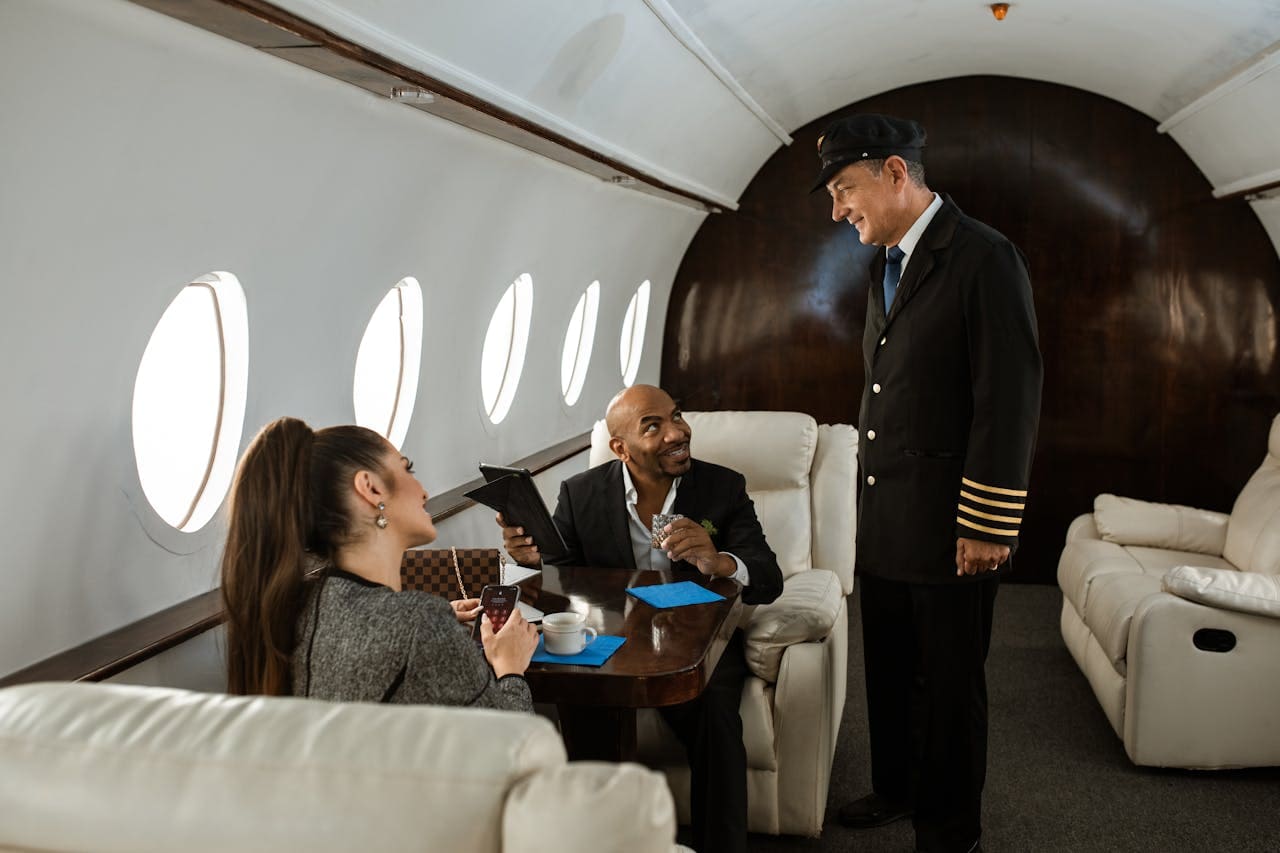
How to Become a Chauffeur: Licences, Skills and Getting Hired
How to become a chauffeur or private driver: the Dutch taxi driver card explained, licensing across Europe, what operators actually screen for, and the real job.

Wedding Transportation: Moving the Guests, Not Just the Couple
A practical wedding transportation guide: shuttle loops, vehicle mix, timings that hold, late-night returns and the contingencies that save the evening.