
City-to-City Chauffeur Travel: When Driving Beats Flying
The honest maths of city to city chauffeur travel in Europe: door-to-door times vs short-haul flights, working en route, and where flying still wins.
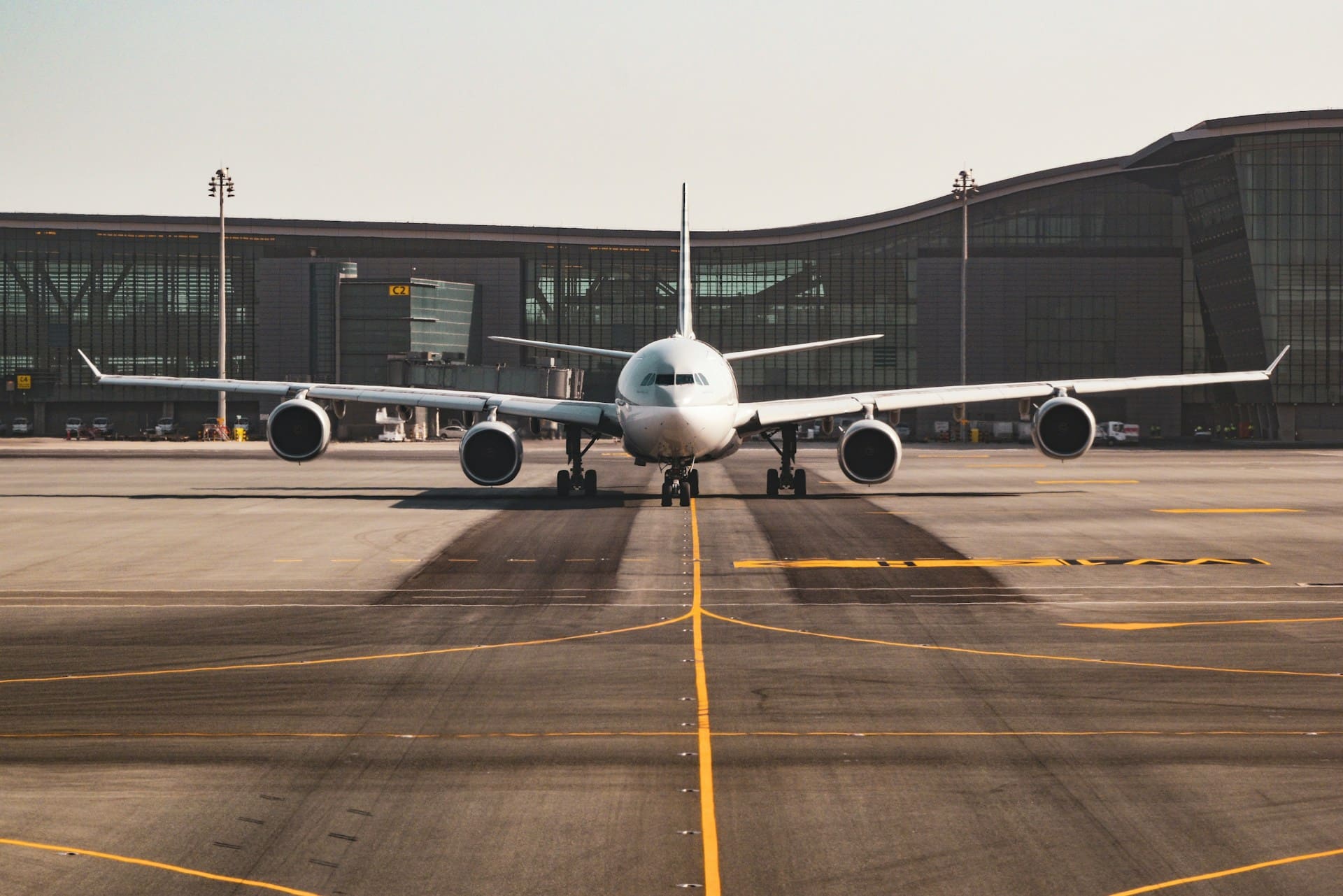
A city to city chauffeur collects you at one address and delivers you to another, in a different city or a different country, in a single uninterrupted drive. Whether that beats a short-haul flight is not a matter of taste: it is arithmetic. On many European routes under about 500 kilometres, the car wins the door-to-door comparison outright, and it is not close.
The airline timetable hides this because it only counts the flight. The hour in the air between Amsterdam and Munich says nothing about the two hours before it or the hour after. So let us do the sums properly.
The Honest Maths of a One-Hour Flight
Take a typical short-haul business trip and count every segment:
- Travel from your home or office to the airport: 30 to 60 minutes
- Recommended arrival before a European departure, covering bag drop and security: 90 to 120 minutes
- The flight itself: about 60 minutes
- Disembarking, walking the terminal, waiting at the baggage belt: 30 to 45 minutes
- Transfer from the destination airport into the city: 30 to 60 minutes
That one-hour flight costs somewhere between four and five and a half hours door to door, and that assumes everything runs to plan. A delayed inbound aircraft, a security queue or a missed connection is not an edge case on short-haul; it is a routine risk you carry on every trip.
A chauffeur removes every one of those segments except the driving. There is no check-in, no security, no boarding group, no baggage belt and no onward transfer, because the vehicle starts at your door and finishes at the other one.
Where the Car Wins, Route by Route
| Route | Road, door to door | Flying, door to door (realistic) | Advantage |
|---|---|---|---|
| Amsterdam to Brussels | 2 to 2.5 hours | 4 to 5 hours | Road, clearly |
| Amsterdam to Antwerp | About 2 hours | No sensible flight | Road |
| Amsterdam to Düsseldorf | About 2.5 hours | 4 to 5 hours | Road |
| Amsterdam to Paris | About 5 hours | 4.5 to 5.5 hours | Even: road for 2+ travellers |
| Amsterdam to Frankfurt | About 4.5 hours | 4.5 to 5 hours | Even |
| Amsterdam to Munich | About 8 hours | 5 to 6 hours | Air, unless working en route matters |
Road times assume normal conditions and sensible breaks on the longer legs. The pattern is consistent: under roughly three hours of driving, the car is simply faster door to door. Between three and five hours, it is a draw on time and the car wins on everything else. Beyond that, flying takes the time argument back, though some clients still choose an eight-hour drive over a flight because those eight hours belong entirely to them.
The Hours You Get Back Are Not Equal Hours
Even where the totals are level, the quality of the time is not. Air travel fragments your day into short segments (queue, wait, board, taxi, climb, descend), none long enough to do real work in, most of them spent standing or shuffling.
A long distance chauffeur journey is one continuous block. The rear cabin of an S-Class is a private office: calls are confidential because nobody else is in the vehicle, a laptop stays open from the first kilometre to the last, and you can sleep without a stranger’s elbow in your ribs. Three productive hours to Brussels are worth more than five fragmented ones through two airports, even before the arrival experience is counted.
There is a softer benefit too. You arrive having finished the preparation, not having queued for it. Clients who switch to road travel for the Amsterdam to Brussels or Amsterdam to Düsseldorf corridor rarely switch back.
Luggage Stays With You
On a flight, your luggage leaves your custody at bag drop and rejoins you, usually, at a belt an hour after landing. Between those points it is handled by machines and strangers, and short-haul connections are exactly where bags go missing.
In a chauffeured car, luggage goes into the boot at your door and comes out at the destination. It is never weighed, never gate-checked, never lost. For anyone travelling with samples, equipment, garment bags or simply more than a cabin case, this alone can settle the argument. It is also why our corporate transportation clients default to road for anything under four hours.
When Flying Still Wins, Honestly
The car does not win everything, and it serves nobody to pretend otherwise.
- Distance. Beyond roughly 700 kilometres (Amsterdam to Milan, Madrid or Vienna), flying is faster door to door and the gap grows with every kilometre.
- Solo travellers on a budget. One person on a cheap advance fare will usually pay less to fly or take the train than to book a private car. The car’s economics improve sharply with two or more passengers sharing it.
- Same-day returns over long distances. If you must be in Munich by morning and home by night, the aircraft is the only honest answer.
What the car offers on every route, long or short, is certainty of the parts you can control: a fixed price agreed at booking, a vehicle that leaves when you are ready, and a plan that bends when your meeting overruns instead of departing without you.
How SilverDrive Runs Intercity Journeys
SilverDrive was founded in Amsterdam by Joshua Faerber and operates its own fleet across the whole of Europe, an intercity car service in the literal sense, not a broker reselling your journey. The price is fixed at booking with no surge and no hidden fees, chauffeurs are screened and English-speaking, and on multi-day itineraries the same chauffeur stays with you throughout.
Vehicle choice follows the journey. The Mercedes-Benz S-Class and BMW 7 Series suit one or two passengers on long legs; the Mercedes-Maybach S-Class is the most comfortable way to cross a continent by road; the V-Class carries up to seven with full luggage. Within Schengen there are no border checks, so a cross-border leg like Amsterdam to Brussels runs as one drive. Our Belgium multi-city guide covers that corridor in detail.
Frequently Asked Questions
Is a Chauffeur Faster Than Flying Between European Cities?
Door to door, often yes on routes under about 500 kilometres. A one-hour flight typically costs four to five hours once you add travel to the airport, check-in, security, boarding and the transfer at the other end. Amsterdam to Brussels, Düsseldorf or Antwerp are usually quicker by road. Beyond roughly 700 kilometres, flying generally wins on time.
How Much Does a Long Distance Chauffeur Cost?
It depends on distance, duration and vehicle class. SilverDrive agrees a fixed price at booking that does not change afterwards: no surge pricing and no hidden fees. For two or more travellers, a shared car compares more favourably against flexible business-class rail or air fares than most people expect. See prices for how quoting works.
Can I Work During a City-to-City Chauffeur Journey?
Yes, and this is the strongest argument for the car. The rear of an S-Class or V-Class is a quiet, private workspace with no boarding calls or strangers alongside. A three-hour drive can be three hours of calls and preparation; the same trip by air fragments into short unusable segments.
Do You Cross Borders on Intercity Journeys?
Yes. Within the Schengen area there are no border formalities, so a drive from Amsterdam to Brussels, Paris or the German cities runs without interruption. SilverDrive operates across the whole of Europe, and on multi-day itineraries the same chauffeur stays with you throughout.
What Vehicles Are Used for Long-Distance Chauffeur Travel?
Most guests choose the Mercedes-Benz S-Class or BMW 7 Series for one or two passengers, the V-Class for up to seven with luggage, and the Mercedes-Maybach S-Class for the most comfortable long-range option. The electric EQS and BMW i7 also handle intercity routes comfortably.
What Happens if My Meeting Overruns Before the Return Leg?
The chauffeur waits and the plan shifts. That is the structural advantage over a booked flight or train seat, which departs whether you have finished or not. With a fixed price agreed in advance, an overrun does not become a renegotiation.
Do the Sums for Your Own Route
Count every segment of your usual short-haul trip (both airport transfers, the queues, the buffer you build in for things going wrong) and set it against one drive from door to door. On most routes out of the Netherlands under 500 kilometres, the chauffeur wins on time and it is not particularly close; on the rest, it wins on what you do with the time. Tell us your route and your dates and we will quote a fixed price for the comparison. Book your city-to-city chauffeur.
More from the Journal
Chauffeur Service in Haarlem: The Quiet Side of Amsterdam
Chauffeur service in Haarlem: Schiphol transfers, the North Sea beaches at Zandvoort, bulb-field season and a medieval centre cars cannot enter.
How to Become a Chauffeur: Licences, Skills and Getting Hired
How to become a chauffeur or private driver: the Dutch taxi driver card explained, licensing across Europe, what operators actually screen for, and the real job.

Wedding Transportation: Moving the Guests, Not Just the Couple
A practical wedding transportation guide: shuttle loops, vehicle mix, timings that hold, late-night returns and the contingencies that save the evening.