
Long-Distance Car Service: Crossing Europe by Road
How a long distance car service works across Europe: driver hours, overnight structuring, fixed cross-border quotes, and when rail or air win.

A long distance car service is chauffeured transport for the journeys taxis are not built for: two hours and upwards, often across a border, sometimes across a week. It is the difference between a ride and an itinerary: a driver-hours plan, an overnight strategy where the distance demands one, and a fixed price that holds from your front door in one country to a hotel in another.
SilverDrive runs these journeys across Europe from an Amsterdam base, with its own fleet and the same chauffeur retained for the duration. This guide explains what qualifies as long-distance, how the serious journeys are structured, and, because candour travels well, when the train or a flight is genuinely the better call.
What Qualifies as Long-Distance?
The threshold is not a number so much as a change in kind. Below about two hours, a journey is a transfer: one driver, one stint, no planning beyond traffic. Beyond two hours or roughly 200 kilometres, the questions multiply (breaks, driver hours, border timing, whether the day should split), and the answer needs to be designed rather than dispatched.
| Distance band | Example | How it runs |
|---|---|---|
| 2 to 3 hours | Amsterdam to Brussels or Düsseldorf | Single stint, one chauffeur, door-to-door |
| 4 to 6 hours | Amsterdam to Paris or Frankfurt | One day with planned breaks; work or rest en route |
| 6 to 10 hours | Amsterdam to Geneva or Munich | Early start and a long day, or an overnight split |
| Beyond 10 hours | Amsterdam to the Riviera or Rome | Overnight stop, relay of chauffeurs, or fly-and-drive |
The corridors in the middle band are where the car is at its strongest, and we cover them in detail in our guide to city-to-city chauffeur travel across Europe. The Amsterdam to Paris run (roughly five hours door-to-door) is the archetype, and has its own route guide.
How the Long Journeys Are Structured
The single long day. Up to five or six hours of driving fits one day comfortably: an early start, planned breaks, arrival with the evening intact. The passenger’s experience is a mobile office or a long rest. The S-Class and BMW 7 Series exist for precisely this, and a V-Class turns the same hours into family time with the luggage problem solved.
The overnight split. Beyond that band, pretending a journey is one day serves nobody. The better shape is a deliberate overnight, often somewhere worth stopping, with the same chauffeur continuing the next morning. A drive to the south of France becomes two civilised days rather than one brutal one, and the trip gains a city it would otherwise have bypassed.
The relay. Where the schedule cannot absorb an overnight, a second chauffeur can take over partway so the car keeps moving while every driver stays inside legal limits. This is a planning exercise (positioning the relief driver, matching the handover to a natural break), and it is arranged before departure, not improvised at a service station.
Fly-and-drive. For the longest distances, the honest structure is often a flight for the middle and chauffeured cars at both ends, booked as one arrangement. The car service’s job is the door-to-door layer, not ideology about roads.
Driver Hours: The Part You Should Not Have to Think About
Professional driving time in Europe is regulated (daily limits, mandatory breaks, rest periods), and the difference between a chauffeur company and a bloke with a saloon is that the company plans inside those rules as a matter of course. When SilverDrive quotes a two-day itinerary, the driving plan already respects the limits; when a client asks for a schedule that would breach them, we say so and restructure it.
Treat this as a filter when comparing operators. Any long distance ride service willing to promise twelve continuous hours behind one driver is telling you what else it is willing to cut. Fatigue is the one risk on a long journey that planning eliminates entirely, and eliminating it is part of what you are paying for.
One Fixed Quote, Borders Included
Long-distance is where metered pricing collapses. No traveller should watch a meter climb through three countries, and no budget-holder should discover tolls, fuel surcharges and waiting time as line items after the fact.
SilverDrive prices every long journey as a single fixed quote, agreed at booking: vehicle, chauffeur, fuel, tolls and the route as described. Traffic delays do not change it; neither does a border. Within the Schengen area there are no formalities to stop for, so Amsterdam to Paris or Frankfurt runs as one uninterrupted drive. Journeys beyond Schengen (into the UK, for instance) are planned around the crossing, and the quote covers the arrangement. See our prices page for how quoting works, or our European operations for coverage.
For companies moving executives on recurring corridors, the same structure scales into corporate transportation: standing arrangements, consolidated invoicing, the same fixed-price discipline.
When Rail or Air Genuinely Win
The car does not win every comparison, and a service that claims otherwise is selling rather than advising.
The train wins for a solo traveller with light luggage on a fast rail corridor. Amsterdam to Paris by high-speed rail is quick and, for one seat, cheaper than a chauffeured car by a wide margin. If that is your journey, take the train.
Flying wins on time once driving stretches much past six to eight hours. For most travellers, Amsterdam to Rome is a flight, not a road trip.
The car wins everywhere the alternatives fray: three or four people travelling together, where one fixed quote beats four tickets; door-to-door schedules with no station transfers at either end; luggage that rail makes miserable; multi-stop days no timetable serves; and travellers who need the journey hours to be private, working hours. It also wins whenever the itinerary is the point: several cities, one car, the same chauffeur throughout.
Frequently Asked Questions
What Counts as a Long-Distance Car Service Journey?
As a working rule, anything beyond about two hours or 200 kilometres, the point where a journey stops being a transfer and starts needing planning. That covers intercity corridors such as Amsterdam to Paris, cross-border business circuits, and multi-day itineraries across several countries.
How Is a Very Long Journey Structured?
Around the passenger’s day and the driver’s legal limits. Up to roughly five or six hours of driving fits a single day comfortably with breaks. Beyond that, the honest options are an overnight stop, a relay of chauffeurs, or a flight for the longest stretch with cars at both ends. A good operator will tell you which fits your case.
Are Chauffeurs’ Driving Hours Regulated?
Yes. Professional drivers in Europe work within regulated driving-time and rest rules, and a serious operator plans every long itinerary inside them. That is a safety feature, not a limitation. A driver twelve hours into a shift is a risk no schedule justifies. The planning is our job, not yours.
Is the Price Fixed for Cross-Border Journeys?
With SilverDrive, yes. The price is agreed at booking and covers the journey as quoted (tolls, fuel and borders included) with no surge pricing and no meter. Within the Schengen area there are no border formalities, so a journey across three countries runs as one uninterrupted drive.
When Is the Train or a Flight Better Than a Car?
A solo traveller with light luggage on a fast rail corridor (Amsterdam to Paris, for instance) is usually better served by the train on cost. Beyond roughly six to eight hours of driving, flying wins on time for most travellers. The car wins for groups, door-to-door schedules, heavy luggage and multi-stop itineraries.
Can the Chauffeur Stay With Me for a Multi-Day Trip?
Yes. On multi-day bookings SilverDrive retains the same chauffeur throughout, including across borders. The car and driver overnight where you do, and each day starts from your door, which is what makes extended European itineraries workable by road.
Book a Long-Distance Car Service
If your journey crosses the two-hour line (one long day, an overnight split, or a week across Europe), send us the shape of it: where it starts, where it ends, who is travelling and what the days must hold. We will come back with a structure that respects the driving limits and a fixed price that respects your budget.
SilverDrive: own fleet, screened English-speaking chauffeurs, 24/7, rated 4.7 out of 5. Book your long-distance journey.
More from the Journal
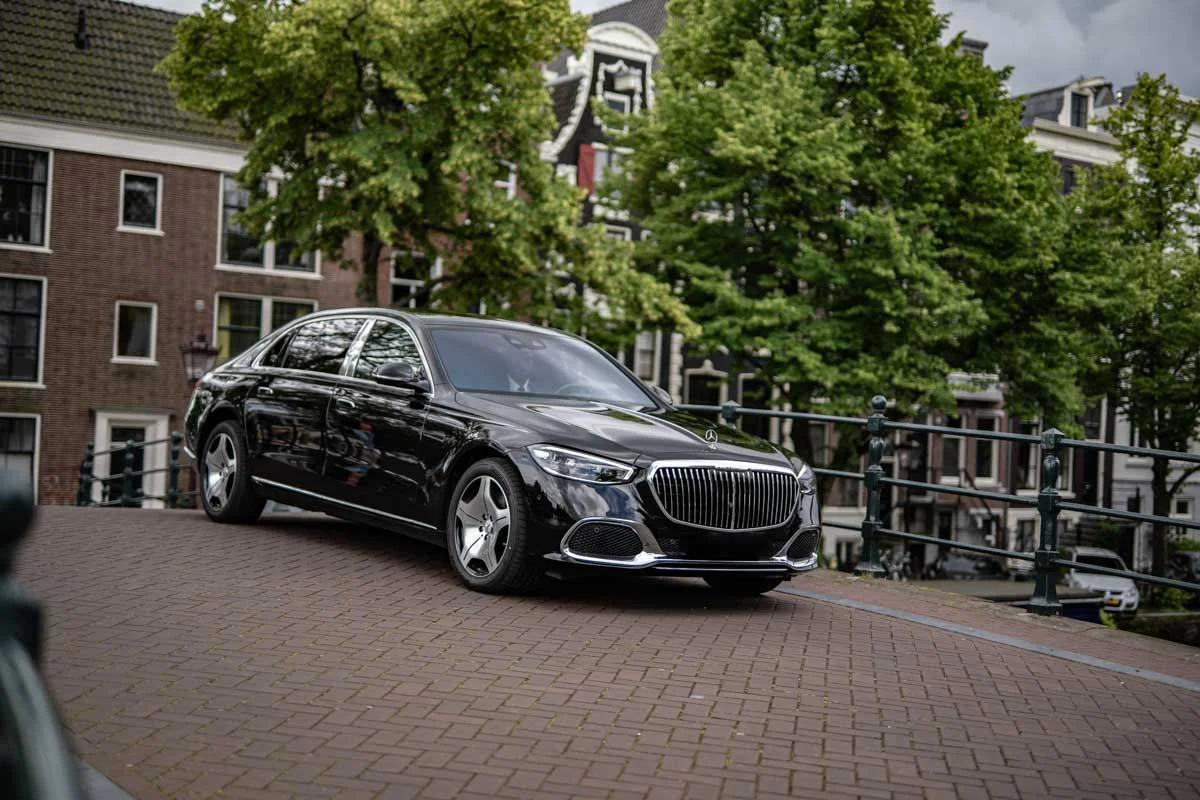
Chauffeur Service in Haarlem: The Quiet Side of Amsterdam
Chauffeur service in Haarlem: Schiphol transfers, the North Sea beaches at Zandvoort, bulb-field season and a medieval centre cars cannot enter.
How to Become a Chauffeur: Licences, Skills and Getting Hired
How to become a chauffeur or private driver: the Dutch taxi driver card explained, licensing across Europe, what operators actually screen for, and the real job.

Wedding Transportation: Moving the Guests, Not Just the Couple
A practical wedding transportation guide: shuttle loops, vehicle mix, timings that hold, late-night returns and the contingencies that save the evening.