
Luxury Transport Services: What a Luxury Chauffeur Buys You
What a luxury chauffeur service really sells: a fixed price, a screened luxury driver, an owned fleet, and when a luxury car with a driver beats a taxi.
A luxury chauffeur service is a journey booked in advance at a fixed price, in a premium vehicle, with a screened professional chauffeur, guaranteed by the company that owns the car. That is the entire product, and it explains why luxury transport services are so badly sold: the marketing shows leather, a badge and a silhouette against a skyline, which is the one part of the purchase that matters least.
The premium is real, so it deserves a real explanation: what the money buys when you book a luxury car with a driver, where it goes, and when paying it is rational rather than vanity. As an operator in this market, we have an obvious interest, and also the visibility to answer honestly.
What a Luxury Chauffeur Service Actually Is
Strip the marketing away and four things have to be true at once: the vehicle comes from a premium class, the person driving is a vetted professional, the price is agreed before you travel, and a company stays answerable until you arrive. Miss any one of them and you have something else wearing the same word.
This is why the searches vary so much and describe the same thing. Some people look for a luxury chauffeur, some for a private car service, some for an executive car service, some simply for a nice car and someone to drive it. Underneath, everyone is asking three questions: who is driving, what will it cost, and what happens if something goes wrong. Luxury transportation services, black car, chauffeured hire: the brochures differ, the thing being bought does not.
The word luxury does most of the work in those searches and the least of the work in reality. A luxury driver who arrives late, unbriefed, and unknown to the company that dispatched him is not delivering a premium service, whatever he is sitting in.
The Premium Is Not the Badge
Start with a thought experiment. Take a Mercedes-Benz S-Class, put an unvetted driver behind the wheel, price the journey by meter and give the passenger no idea who is coming or when. Is that luxury transport? It is a luxurious car, and a poor service. And most disappointments in this market come from exactly that gap.
Now invert it. A screened chauffeur who has your flight number, a price fixed days ago, a car confirmed by class, a company answerable if anything slips, delivered in a well-kept E-Class. No one would photograph it for a brochure, and it is a better product than the first case by every measure a traveller actually experiences.
The conclusion is uncomfortable for the industry’s marketing but useful for its customers: luxury in ground transport is a set of guarantees, and the vehicle is only one of them, the visible one. Finding a chauffeur with a luxury car is easy. Finding a company that stands behind both is the part worth your attention.
The Five Guarantees Behind a Luxury Car With a Driver
A fixed price, carried by the operator. The quote agreed at booking is the price, whatever the traffic, the weather or the date does. That certainty is not free to provide (the operator absorbs the variance you would otherwise carry), and it is the first thing to check on any price list. No surge, no meter, no post-journey surprises.
A screened human being. A luxury ride service stands or falls on the person driving. Screening, training, language, presentation, and the judgement to be invisible during your phone call and helpful at the kerb: these come from selecting and keeping good chauffeurs, which is the single most expensive thing a genuine operator does.
An owned fleet. When the operator owns the car, it controls the maintenance, the cleanliness, the insurance and the promise that the class you booked is the class that arrives. When it does not, you are buying a photograph of someone else’s car. SilverDrive’s fleet (Mercedes-Benz E-Class, S-Class, V-Class, EQS, EQV and Mercedes-Maybach, BMW 7 Series and i7) is owned, never brokered.
Continuity. On multi-day work the same chauffeur stays with you, so preferences stated once hold for the week. This sounds small and is not: it is the feature corporate clients renew for, and it is the whole basis of a standing personal driver arrangement.
Discretion. Unmarked vehicles, a chauffeur who does not discuss passengers, movements that are nobody’s business but yours. For high-profile clients this is the entire product; for everyone else it is a quiet standard you notice only if it is missing.
Luxury Taxi, Ride-Hail or Chauffeur: What the Names Mean
A great many people looking for this product search for a luxury taxi service, which is a reasonable way to describe it and a poor way to buy it. In Europe the words point at three different arrangements, and the difference decides who is accountable when your evening goes sideways.
| What you book | How it is priced | Who is accountable |
|---|---|---|
| Taxi | By the meter, set by the trip and the traffic | The individual driver, in most cases |
| Ride-hail premium tier | Dynamically, quoted the moment you tap | The platform, within its own terms |
| Chauffeur service | Fixed at booking, agreed in writing | The operator that owns the car and employs the chauffeur |
A luxury taxi is a taxi with a better car in it: hailed or booked at short notice, excellent for what it is, and priced by a meter you cannot see in advance. Chauffeured luxury ground transportation is a different purchase: reserved for a named passenger on a named day, with the vehicle, the driver and the total settled beforehand. Neither is superior in the abstract. They fail in different places, and the failures are what you are choosing between.
What Makes Chauffeurs Excellent Rather Than Merely Available
Every company in this market describes its chauffeurs as excellent. The word is free, so treat it as a claim to be tested rather than a fact to be read.
Excellent chauffeurs are made by selection and retention, not by uniform. Screening comes first: identity, driving record, references, and an interview that tests judgement rather than politeness. Training follows: airport procedure, route planning, how to handle a delay without theatre, when to speak and when to disappear. Then comes the part most companies skip, which is paying and keeping those people through the quiet months so they are still there in the busy ones.
This is where high-end chauffeurs separate from merely available ones, and none of it is visible in a photograph. An experienced luxury car driver knows which arrivals lane moves at six in the morning, remembers that a particular passenger prefers the quieter entrance in the rain, and reads a delayed flight before the passenger has to. That knowledge cannot be subcontracted at short notice, which is why an exclusive chauffeur service keeps its own people rather than calling round when the diary fills.
Where the Money Actually Goes
A luxury transportation service’s cost base is unglamorous. Premium vehicles are expensive to buy, insure and maintain to the standard the word implies: an S-Class that smells of anything, or rattles, has stopped being one. Professional chauffeurs are retained, not summoned by algorithm, which means paying them properly through quiet weeks so they exist in busy ones. Held capacity means a confirmed 04:30 airport departure is staffed even though nothing else moves at that hour. Fixed pricing means the operator eats the bad-traffic days. And 24/7 dispatch means a person answers at 03:00 when your plans change.
Every one of those line items removes a failure mode from your journey. That is the honest answer to “why does it cost more”, not the leather.
When the Luxury Tier Is Rational, and When It Is Vanity
Candour cuts both ways, so here is the case against us. For a short, spontaneous, low-stakes trip (across town on a free afternoon, no deadline, nothing riding on it), a taxi or ride-hail is the rational choice, and the premium buys comfort alone. Comfort is a legitimate thing to buy. It is a preference, though, not a necessity, and we would rather say so than pretend every journey needs an S-Class.
The calculation flips when failure has a cost. A missed intercontinental flight costs more than a year of premium transfers. A key client collected clumsily costs goodwill no fare can measure. A confidential conversation held in a stranger’s car may cost most of all. When any of those apply, the luxury tier is not indulgence; it is the cheap insurance, which is why corporate transportation buyers, the least sentimental customers in this market, keep choosing it.
Which Car, and Which Chauffeur, for Which Journey
Within the tier, match the vehicle to the stakes rather than defaulting upward.
| Vehicle | Suits | What people are really booking |
|---|---|---|
| Mercedes-Benz E-Class | Daily business travel, airport runs | The quiet default: a premium car with a driver and no statement attached |
| Mercedes-Benz S-Class, BMW 7 Series | Long transfers, senior passengers, client collection | Comfort over distance and the impression made at the kerb |
| Mercedes-Benz EQS, BMW i7 | Companies with emissions reporting | The full luxury tier with zero tailpipe emissions |
| Mercedes-Benz V-Class, EQV | Groups, families, luggage-heavy days | One chauffeur and one vehicle instead of a convoy |
| Mercedes-Maybach S-Class | Weddings, state-level hospitality, flagship moments | An occasion where the car is part of the event |
The guarantees underneath every row are identical, which is the point: you are choosing a seat, not a different standard of care. See our piece on Maybach chauffeur service in Europe for when the top tier is worth it, and on electric chauffeur cars for what changes on a long transfer once the car is battery powered.
How SilverDrive Delivers Luxury Ground Transportation
SilverDrive was founded in Amsterdam by Joshua Faerber and operates across the Netherlands and Europe, 24/7, rated 4.7 out of 5. The guarantees above are not aspirations; they are the operating model of our chauffeur service: fixed prices agreed at booking, screened English-speaking chauffeurs, an owned fleet from E-Class to Maybach including electric options, the same chauffeur across multi-day bookings, and free flight tracking on every airport pickup.
The same terms apply whichever shape the work takes. A single transfer is quoted door to door. A day of meetings is quoted as a car and chauffeur held by the hour, waiting between stops and absorbing overruns. Neither format changes who is driving, who owns the car, or what you pay at the end.
Decide With Your Eyes Open
If the journey ahead of you is one where failure would cost more than the premium, book with SilverDrive and we will confirm the vehicle, the chauffeur and the fixed price in advance. If it is not, take the taxi, and keep us for the days that matter.
Frequently Asked Questions
What counts as a luxury transport service?
A service defined by guarantees rather than by the badge on the bonnet: a fixed price agreed at booking, a screened professional chauffeur, a vehicle from an owned fleet confirmed in advance, continuity across multi-day work, and discretion throughout. The premium vehicle is the visible layer; the guarantees are what you are actually buying.
What is the difference between a luxury taxi and a luxury chauffeur service?
A luxury taxi is a taxi in a better car: hailed or booked at short notice, priced by the meter, and accountable to the driver in front of you. A luxury chauffeur service is reserved in advance for a named passenger, with the vehicle class, the chauffeur and the total price all settled before the day arrives, and a company answerable for all three. The car may look similar; the purchase is not the same.
Why is a luxury car service more expensive than ride-hail?
Because the costs sit in things ride-hail deliberately avoids: owning and maintaining premium vehicles, screening and retaining professional chauffeurs, holding capacity so a confirmed booking is never dropped, and absorbing risk through fixed pricing. Each removes a failure mode from your journey, and each costs real money to provide.
Can I book a luxury car with a driver by the hour or for a full day?
Yes. Alongside point-to-point transfers, SilverDrive holds a car and chauffeur for a block of hours or a full working day, quoted as one fixed figure before the day starts. The vehicle waits between stops and absorbs changes of plan without rebooking, which is why roadshows, multi-meeting days and touring days are usually booked this way.
When is paying for luxury transport rational?
When the cost of failure exceeds the premium. A missed flight, a client collected badly, a confidential conversation overheard, or two working hours lost to logistics each cost more than the difference between a luxury service and a cheap ride. For a low-stakes hop across town on a free afternoon, the premium buys comfort only, and that is a preference, not a necessity.
Does luxury transport mean a Maybach or Rolls-Royce?
Not necessarily. Most luxury ground transportation happens in executive saloons like the Mercedes-Benz S-Class or BMW 7 Series. Ultra-luxury vehicles such as the Mercedes-Maybach S-Class are the top tier, chosen when the vehicle itself is part of the occasion: weddings, state-level hospitality, flagship client moments. The service guarantees beneath both tiers are identical.
What makes chauffeurs excellent rather than merely available?
Selection and retention. Excellent chauffeurs are screened before they drive anyone, trained in airport procedure and route planning, and then kept through the quiet months so they are still there in the busy ones. Companies that subcontract at the last minute cannot promise you any of that, because they do not know who will turn up either.
Are electric vehicles available at the luxury tier?
Yes. The Mercedes-Benz EQS and BMW i7 are full luxury saloons that happen to be electric, and the electric EQV covers group travel. SilverDrive runs all three in its own fleet. For companies with sustainability reporting, an electric chauffeured journey now involves no compromise on comfort or range for typical European routes.
How do I judge whether a luxury operator is genuine?
Test the guarantees, not the photography. Ask for a fixed all-in price in writing, ask whether the company owns the exact vehicle class it is promising, ask who the chauffeur is and how they were screened, and ask what happens if your flight is late. A genuine operator answers all four immediately; a reseller of other people’s cars cannot.
More from the Journal
Chauffeur Service in Haarlem: The Quiet Side of Amsterdam
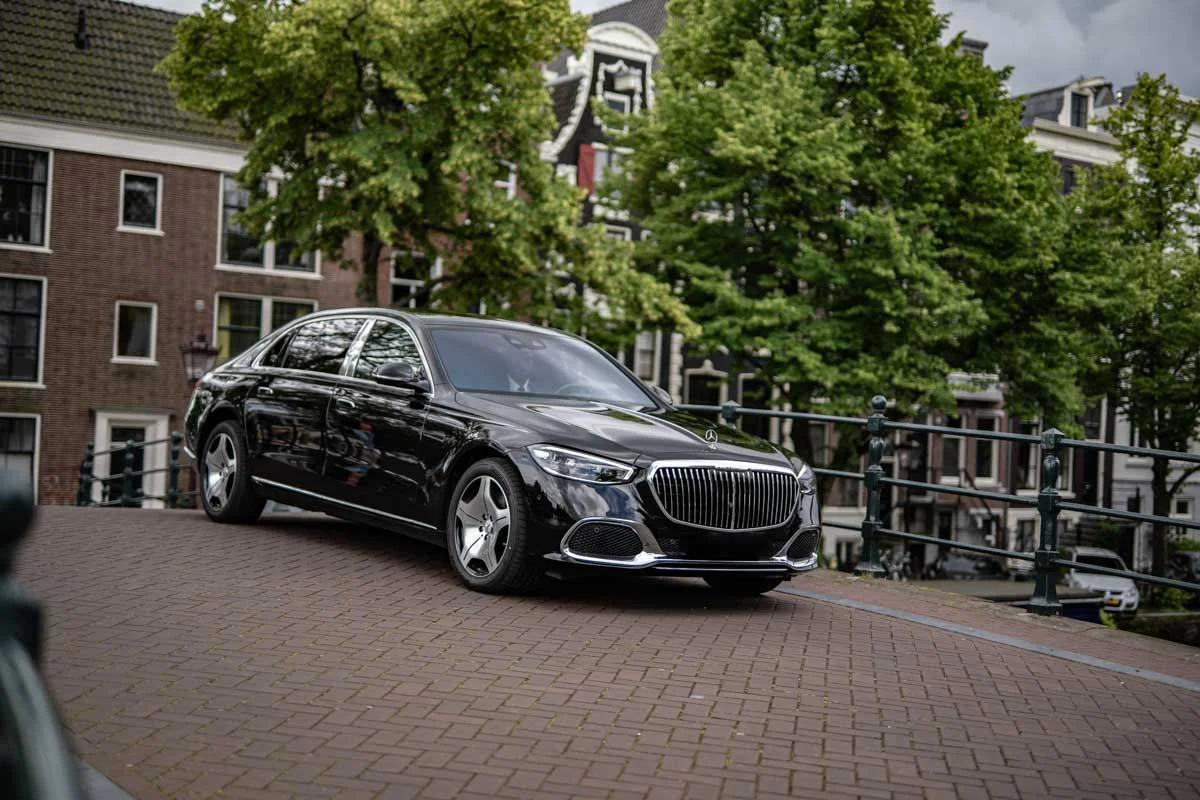
Chauffeur service in Haarlem: Schiphol transfers, the North Sea beaches at Zandvoort, bulb-field season and a medieval centre cars cannot enter.
How to Become a Chauffeur: Licences, Skills and Getting Hired
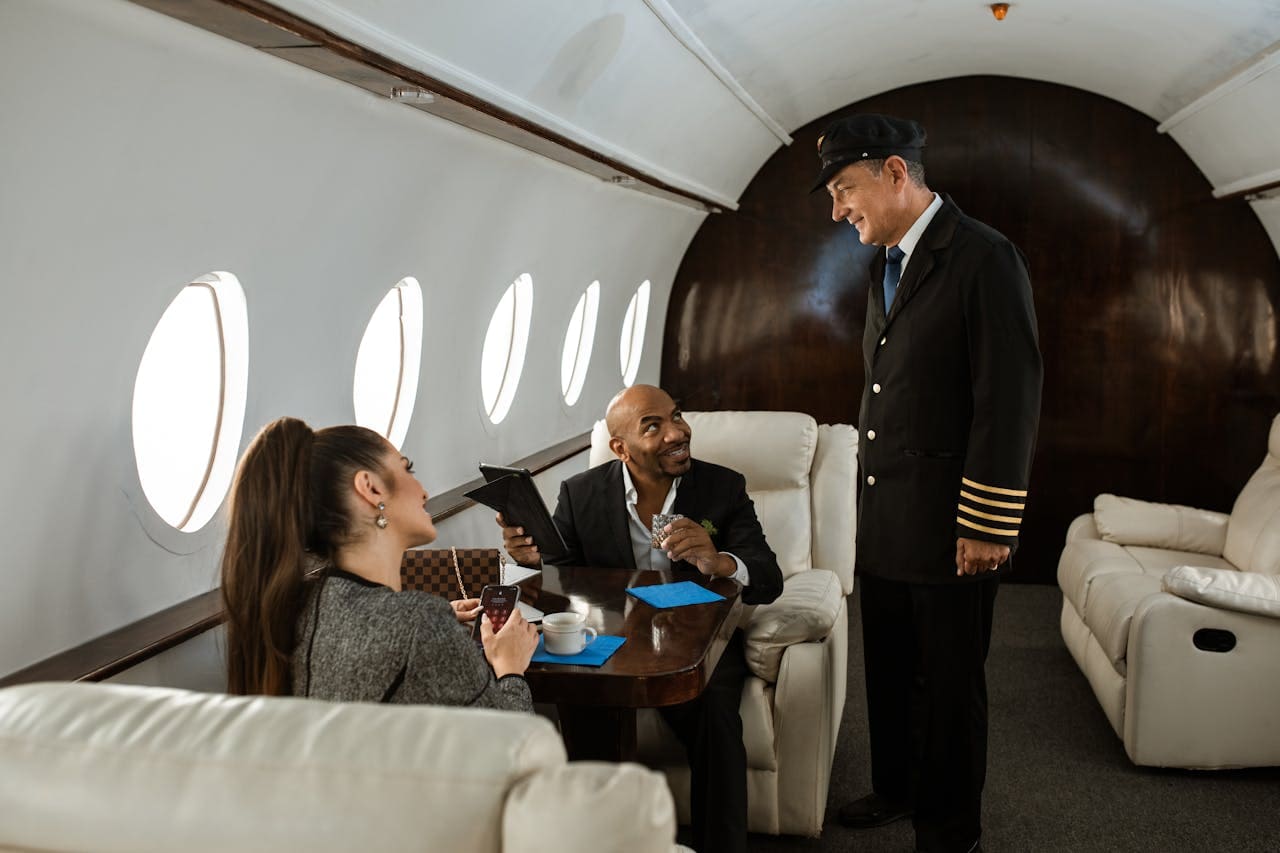
How to become a chauffeur or private driver: the Dutch taxi driver card explained, licensing across Europe, what operators actually screen for, and the real job.

Wedding Transportation: Moving the Guests, Not Just the Couple
A practical wedding transportation guide: shuttle loops, vehicle mix, timings that hold, late-night returns and the contingencies that save the evening.